Dishwasher repair cost starts with the symptom: a machine that will not start, will not drain, washes poorly, dries poorly or leaks is pointing at different systems, and the estimate follows whichever one is at fault.
Dishwasher repair cost starts with the symptom: a machine that will not start, will not drain, washes poorly, dries poorly or leaks is pointing at different systems, and the estimate follows whichever one is at fault. Say which of those it is, check the user-accessible filter, and note any code before booking.
Dishwasher cost expectations become much clearer when the symptom is specific. A machine that does not drain, one that will not start and one that washes poorly may share the same exterior appearance but involve completely different systems.
State whether the problem is power, wash, drain, dry or leak related. Check the user-accessible filter and obvious drain-hose kink before the visit. Record any code and whether the pump or controls can be heard. These steps are useful because they are external, reversible and give you information without turning a symptom into an unsafe DIY repair.
A clogged filter or installation issue may be resolved with limited labor. A failed pump, latch, heater or control component changes the parts and labor picture. Built-in access and panel removal can also affect the job.
A good troubleshooting note includes the exact model, what the appliance was doing when the symptom appeared, whether the condition is constant or intermittent, and any display code. Changing several settings at once makes the pattern harder to interpret, so make one safe change at a time and record the result.
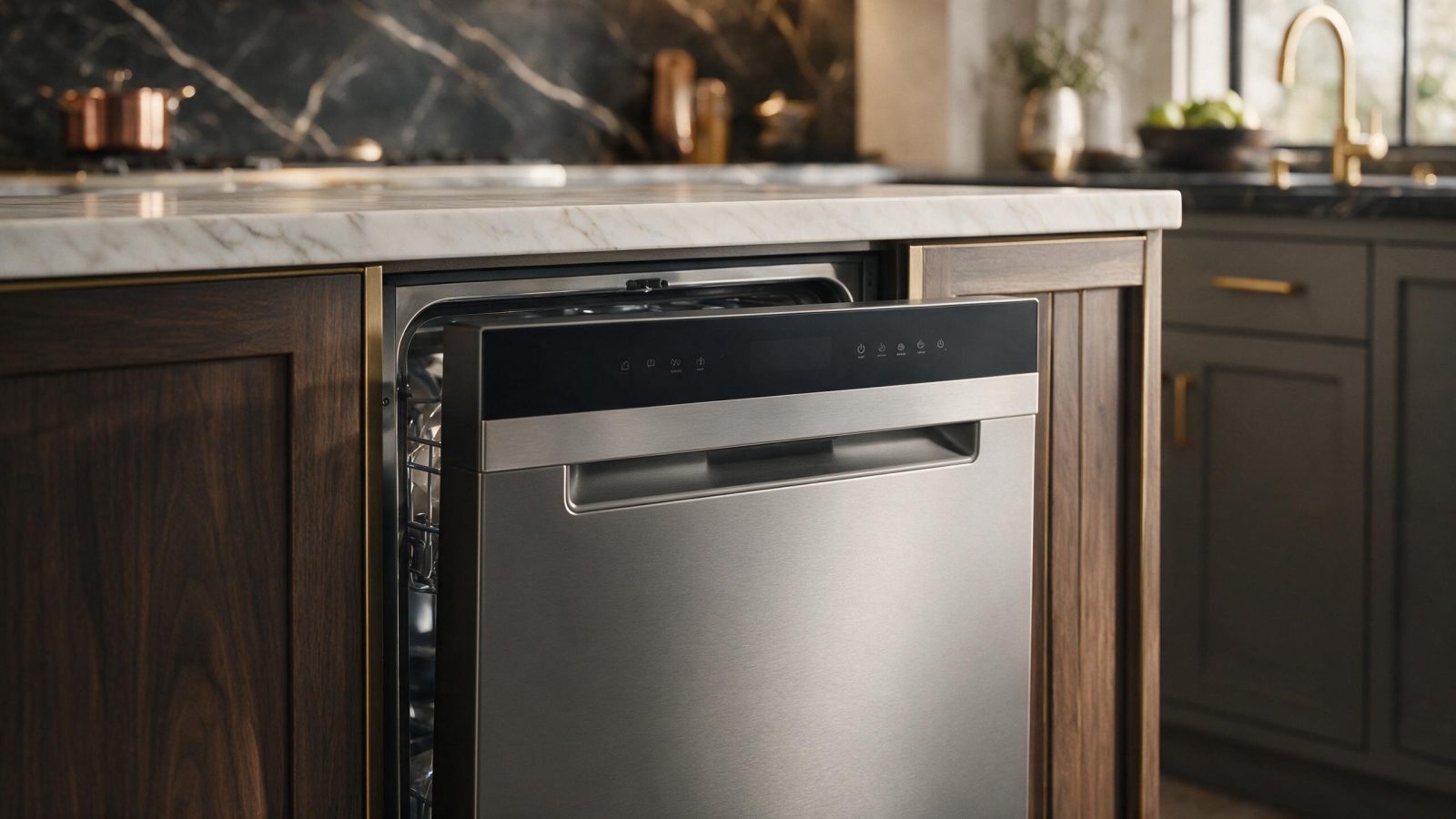
The installation and maintenance manual for one Bertazzoni 24-inch dishwasher lists several causes that cost nothing to check. For water remaining inside, it names a clogged or twisted drain hose, clogged filters or a program that has not finished. For a program that will not start, it lists the machine not being plugged in or switched on, a blown fuse, a closed water tap, an open door, or a clogged inlet hose or filters.
If the screen is dead, it says to check the breaker and the cord. Your own model’s manual may differ, but these entries show how many symptoms have simple explanations that change the estimate.
| Symptom | What it can point to | What you can safely check |
|---|---|---|
| Water left in the tub after the cycle | A clogged filter, a kinked drain hose, or a cycle that is not finished | Look at the user-accessible filter and the visible hose, then let the program end |
| Program does not start | Power, a closed water tap, an open door or a clogged inlet | Check the door, the tap and the breaker |
| Display shows a fault code | A specific condition the control has detected, such as a drain or inlet problem | Write down the code before cancelling the program |
| Machine is silent with a dark display | A power supply interruption | Check the breaker and the cord |
The purpose of these checks is not to prove which internal component has failed. It is to remove simple operating conditions and give the technician a cleaner starting point. If the symptom returns after the normal manual-approved checks, the next step should be diagnosis rather than repeated resets or improvised disassembly.
The same manual lists F2 as an inability to discharge water, where the drain hose and filters may be clogged; it says to cancel the program and call service if it persists. FF is a water inlet failure, and the manual suggests checking the tap and cleaning the hose filter. F1 is an overflow, and the manual says to unplug, close the tap and call service.
The manual also gives installation details that a technician may check, such as a drain hose that needs a 30 inch high loop and must not be kinked, and supply hot water in the range it specifies. An installation fault can look like a failed component, which is why access and set-up findings affect what a repair involves.
Avoid online “flat prices” that are presented without model, diagnosis or access details. A useful estimate should be tied to the actual failed component and should be approved before repair work proceeds.
If the appliance is leaking near electricity, smells of gas or burning insulation, sparks, overheats abnormally, or repeatedly trips a breaker, stop using it. Safety symptoms take priority over completing a cycle or protecting food.
Continue with Standing Water in the Dishwasher Tub? Start With the Filter for the closest next step. Also see Dishwasher Panel Gone Silent? Work Through This Before Booking Service when the symptom overlaps with that system.
Schedule service when the symptom is repeatable after the safe checks, when a model-specific error returns, or when the next diagnostic step requires internal electrical, gas, sealed-refrigeration or built-in extraction work. The service request should include the model number, the exact symptom, the checks already completed and any photo of the display that helps document the condition.
Should I keep resetting the appliance if it works for a while afterward?
No. One documented reset can clear a temporary control state, but a fault that returns should be diagnosed rather than repeatedly cleared.
Should I order a part before the technician arrives?
Usually not. Similar symptoms can come from different causes, and an unnecessary part can cost more than the time saved. Confirm the failed component first.
What should I send with the booking request?
Send the model number, a concise description of the symptom, any error code, when the issue started and the result of the safe checks above.
What does the F2 code mean on a Bertazzoni dishwasher?
For the 24-inch models in one manual, F2 means the machine cannot discharge water, and the drain hose and filters may be clogged. The manual says to cancel the program and call service if it persists.
Is a little water at the bottom after a cycle normal?
The manual for one model says some water in the drain filter area, below the filter screen, is normal after a cycle. Standing water above that, or water that remains after the program finishes, is worth reporting.
Does cleaning the filters change the cost of a visit?
It can rule out one simple cause, and the manual advises cleaning the filters often. If the symptom continues after the filters are clean, the estimate then follows the diagnosis.
Author: Julian Reed — Appliance Care & Technical Review
—
An oven repair costs what the cause requires, and the same complaint, such as not heating or heating unevenly, can come from very different…
On an induction cooktop, a zone that will not heat is usually checked against the cookware and placement first, because pan detection blocks heating…
A wine cooler repair estimate depends on what the diagnosis finds, and the most useful thing you can bring is actual temperature data for…
Share a few details and we’ll confirm an appointment. Prefer to talk? Call us and we’ll help right away.
Use the secure scheduler below to request your appointment.