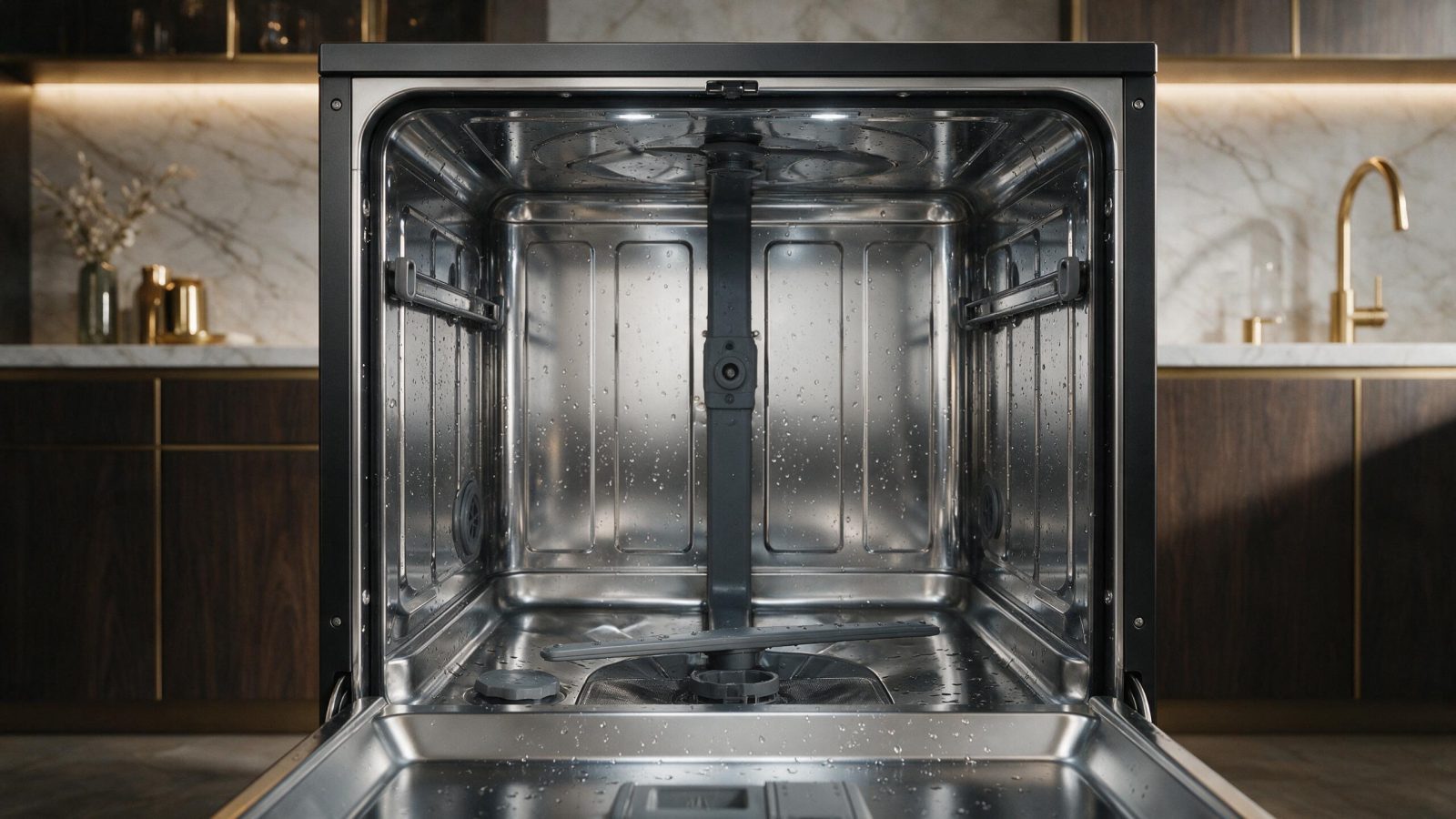
Water left covering the tub floor after a finished cycle can trace back to something that blocks the path to the drain, such as a dirty filter or a twisted drain hose.
Water left covering the tub floor after a finished cycle can trace back to something that blocks the path to the drain, such as a dirty filter or a twisted drain hose. Clean the filter first, look at the visible hose, and book service if the water stays or a drain code returns.
A small amount of water below the filter area can be normal on some dishwashers. A visible pool covering the bottom of the tub after the cycle is different and deserves a drainage check. If the pool is still there after you have confirmed the cycle is over, treat it as a drainage question rather than a rinse-quality one.
Let the machine cool and clean the user-accessible filter. Check the visible sump carefully for obvious debris. Inspect the external drain hose for a safe-to-see kink and note any recent plumbing changes. These steps are useful because they are external, reversible and give you information without turning a symptom into an unsafe DIY repair.
Run only the normal drain or cancel function described for the model. If the pump hums but water does not move, or the same drain code returns, stop cycling the machine. Repeated attempts can turn a drainage problem into a leak.
The use-and-care manual for one Bertazzoni 24-inch dishwasher describes a three-part filter system: coarse, fine and micro. It tells owners to clean the filters often and to clean the whole machine, filters and spray arms at least monthly, using soap, water and a soft brush rather than a wire brush. A filter that has been catching debris for weeks is the first place water can back up, which is why this check comes before anything else.
The same manual lists three causes when water remains inside: a clogged or twisted drain hose, clogged filters, or a program that has not finished. The third one is easy to overlook. If the display still shows a running program, water in the tub may simply be part of the cycle, so confirm the cycle has actually ended before treating it as a drainage fault..
A good troubleshooting note includes the exact model, what the appliance was doing when the symptom appeared, whether the condition is constant or intermittent, and any display code. Changing several settings at once makes the pattern harder to interpret, so make one safe change at a time and record the result.
The purpose of these checks is not to prove which internal component has failed. It is to remove simple operating conditions and give the technician a cleaner starting point. If the symptom returns after the normal manual-approved checks, the next step should be diagnosis rather than repeated resets or improvised disassembly.
| Symptom | What it can point to | What you can check |
|---|---|---|
| A little water below the filter screen after the cycle | Described as normal in the manual for one model | Nothing to do; compare with a pool that covers the tub floor |
| Water covering the tub floor, filter visibly dirty | A clogged filter | Clean the filter as the manual describes, then run a normal cycle |
| Water remains and the visible hose looks twisted | A restricted drain hose; the manual calls for a high loop and no kinks | Look at the part of the hose you can see without pulling the machine out |
| Display code F2 | The manual for one model describes it as water that cannot be discharged | Cancel the program, clean the filters, check the visible hose, and call if it persists |
| Water present while a program is still showing | The cycle has not finished | Wait for the cycle to end before drawing conclusions |
If water reaches an outlet or electrical area, stop and follow electrical-safety guidance before doing anything else. Do not pour household drain chemicals into the dishwasher.
If the appliance is leaking near electricity, smells of gas or burning insulation, sparks, overheats abnormally, or repeatedly trips a breaker, stop using it. Safety symptoms take priority over completing a cycle or protecting food.
If the water clears after you clean the filter, you have learned that the filter was part of the problem. You have not learned why it clogged so quickly, so keep an eye on whether the water returns after a few cycles. If it does, the cause may sit further along the drain path.
If the water stays after the filter and visible hose check out, the result is just as useful: it rules out the simple conditions and points toward the drain pump or the connection to the household drain. Those are not owner-level checks. The manual for one model also describes an F1 overflow code, and its instruction is to unplug the machine, close the water tap and call service. Treat that one as a stop sign rather than a cleaning prompt.
Continue with Dishwasher Repair Cost Without the Guesswork: Start With the Symptom for the closest next step. Also see Water Near an Outlet: The One Situation That Overrides Every Other Rule when the symptom overlaps with that system.
Schedule service when the symptom is repeatable after the safe checks, when a model-specific error returns, or when the next diagnostic step requires internal electrical, gas, sealed-refrigeration or built-in extraction work. The service request should include the model number, the exact symptom, the checks already completed and any photo of the display that helps document the condition.
Should I keep resetting the appliance if it works for a while afterward?
No. One documented reset can clear a temporary control state, but a fault that returns should be diagnosed rather than repeatedly cleared.
Should I order a part before the technician arrives?
Usually not. Similar symptoms can come from different causes, and an unnecessary part can cost more than the time saved. Confirm the failed component first.
What should I send with the booking request?
Send the model number, a concise description of the symptom, any error code, when the issue started and the result of the safe checks above.
Is a little water in the bottom of a dishwasher normal?
On the manual for one Bertazzoni model, some water in the drain filter area after a cycle, below the filter screen, is described as normal. A pool that covers the tub floor is a different situation and calls for the filter and hose checks above.
Why is there water in my dishwasher after the cycle ended?
The manual for one model lists a clogged filter, a clogged or twisted drain hose, or a program that has not finished. Check that the cycle is complete, clean the filter, and look at the visible hose before assuming a part has failed.
Can I use a wire brush on a clogged dishwasher filter?
The manual for one model says to use soap, water and a soft brush, and not a wire brush.
Author: Julian Reed — Appliance Care & Technical Review
—
A temperature reading tells you whether the cabinet is actually warm or only feels that way after the door was open.
An empty ice bin can come down to the ice maker being switched off, the freezer running warm, or a water supply or filter…
An induction zone heats only when it detects a suitable pan sitting correctly on it, so the first thing to check is the cookware…
Share a few details and we’ll confirm an appointment. Prefer to talk? Call us and we’ll help right away.
Use the secure scheduler below to request your appointment.