An oven repair costs what the cause requires, and the same complaint, such as not heating or heating unevenly, can come from very different faults.
An oven repair costs what the cause requires, and the same complaint, such as not heating or heating unevenly, can come from very different faults. The most useful preparation is to note which modes still work, what the oven does during preheat and any code on the display, so the estimate can follow the actual finding.
Oven repair cost is driven by the cause, not by the fact that the oven is not heating correctly. A calibration issue, temperature sensor problem, heating component fault, door-lock problem and control failure all require different work.
Note which cooking modes still work. Record whether the oven preheats, overshoots, underheats or trips power. Share any error code and whether the problem appeared after self-clean or a power event. These steps are useful because they are external, reversible and give you information without turning a symptom into an unsafe DIY repair.
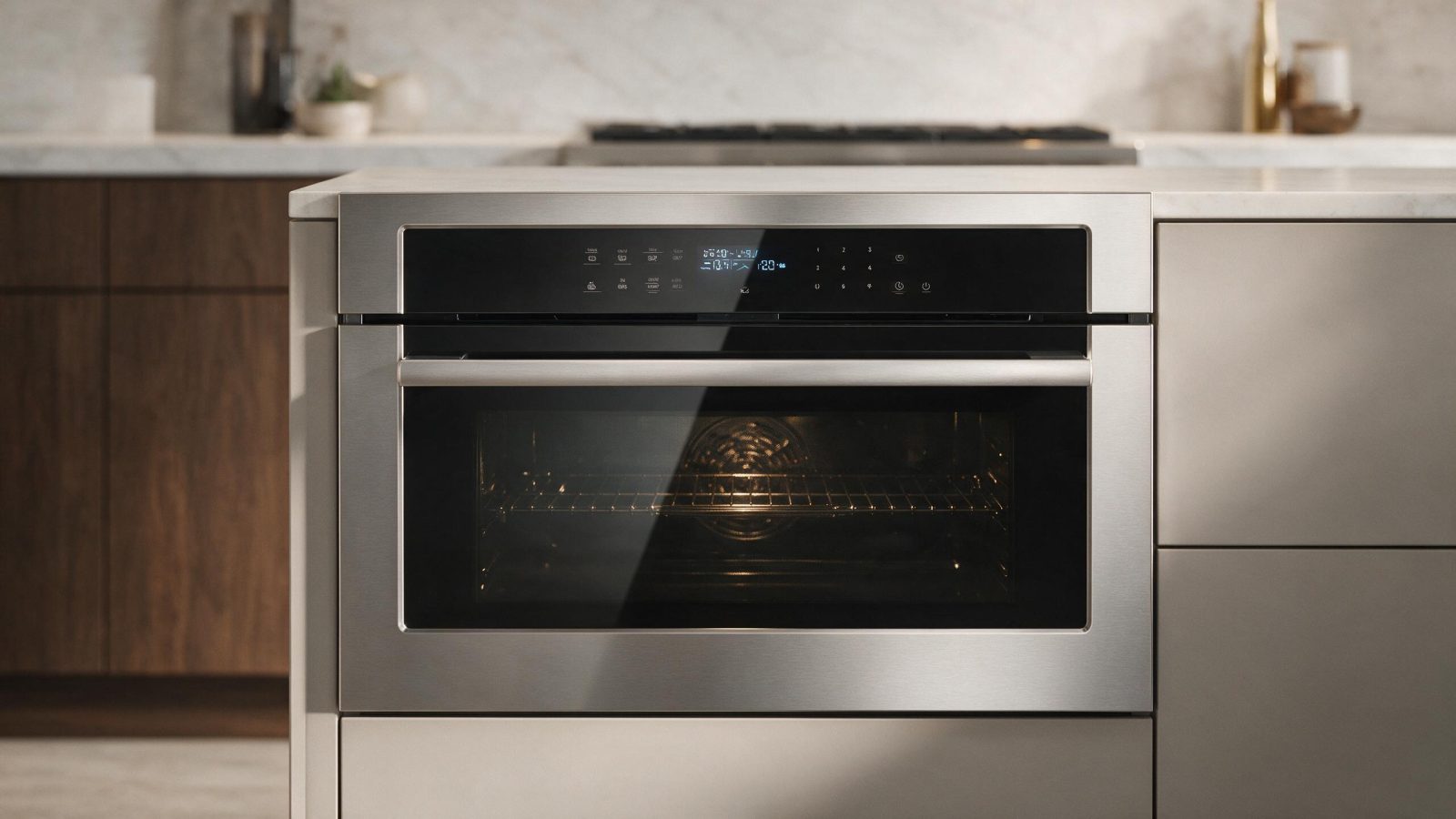
Access matters with built-in wall ovens because the appliance may need controlled removal for certain repairs. Labor also changes when a fault can be confirmed from the front versus when the unit must be extracted from cabinetry.
A good troubleshooting note includes the exact model, what the appliance was doing when the symptom appeared, whether the condition is constant or intermittent, and any display code. Changing several settings at once makes the pattern harder to interpret, so make one safe change at a time and record the result.
The use-and-care manual for one Bertazzoni gas range lists a few non-repair explanations. If the oven does not heat, it says to check that the showroom function is not active, and if the oven will not operate at all, to check the power and the breaker. Ruling these out can change a visit from a repair to a settings correction.
The manual for one Bertazzoni dual fuel range goes further and says a failing oven cooling-fan motor inhibits the heating elements, so the oven will not heat; it directs you to after-sale service. That is a good example of why a heating complaint is not always about the heating element, and why the cost depends on what the diagnosis actually finds.
| Symptom | What it can point to | What you can safely check |
|---|---|---|
| Oven will not heat but the display works | A setting such as showroom mode, a power issue, or a fault in a supporting component | Check the manual for your model, confirm the breaker, and note the mode you used |
| Oven heats in some modes but not others | A fault tied to one element or to the fan used by that mode | Record which modes work and which do not |
| Oven heats but the temperature seems off | Calibration, a sensor, or normal cycling around the setpoint | Compare results using the same pan and rack on another day |
| Problem started after self-clean or a power event | A control or lock state following that event | Note the sequence and any code before calling |
The purpose of these checks is not to prove which internal component has failed. It is to remove simple operating conditions and give the technician a cleaner starting point. If the symptom returns after the normal manual-approved checks, the next step should be diagnosis rather than repeated resets or improvised disassembly.
Some things look like faults and are not. The Bertazzoni US FAQ says the oven fan can keep running after the oven is turned off because it is cooling the oven, and that hot air from the door gap on counter-depth installs is normal. The manual for one gas range also describes a thermostatically controlled cooling fan and says that pushing heated air into the room while the oven runs is normal.
Telling a technician what you observed, and what the manual says is normal for your model, keeps the diagnostic time focused on real faults rather than designed behavior.
A responsible estimate should separate diagnostic findings, parts and labor rather than promising one universal oven price. If the appliance has electrical warning signs, safety takes priority over trying to reduce the visit cost through DIY testing.
If the appliance is leaking near electricity, smells of gas or burning insulation, sparks, overheats abnormally, or repeatedly trips a breaker, stop using it. Safety symptoms take priority over completing a cycle or protecting food.
Continue with One Side of the Tray Always Browns First? Here’s Why for the closest next step. Also see Self-Clean Cycle Finished But the Oven Door Is Still Locked? when the symptom overlaps with that system.
Schedule service when the symptom is repeatable after the safe checks, when a model-specific error returns, or when the next diagnostic step requires internal electrical, gas, sealed-refrigeration or built-in extraction work. The service request should include the model number, the exact symptom, the checks already completed and any photo of the display that helps document the condition.
Should I keep resetting the appliance if it works for a while afterward?
No. One documented reset can clear a temporary control state, but a fault that returns should be diagnosed rather than repeatedly cleared.
Should I order a part before the technician arrives?
Usually not. Similar symptoms can come from different causes, and an unnecessary part can cost more than the time saved. Confirm the failed component first.
What should I send with the booking request?
Send the model number, a concise description of the symptom, any error code, when the issue started and the result of the safe checks above.
Why does the oven fan keep running after I turn the oven off?
The Bertazzoni US FAQ says the fan can keep running because it is cooling the oven. That is normal, though a fan that runs strangely or alongside heating problems is worth mentioning.
Why does a technician ask which cooking modes still work?
Different modes use different elements and the fan. The manual for one range describes upper bake, lower bake, broil and convection elements used alone or together, so which modes fail points toward which part of the oven to examine.
Is hot air at the door gap a fault?
On counter-depth installations the US FAQ calls hot air from the door gap normal. Check your manual, and report it only if it comes with a heating or performance problem.
Author: Julian Reed — Appliance Care & Technical Review
—
On an induction cooktop, a zone that will not heat is usually checked against the cookware and placement first, because pan detection blocks heating…
A wine cooler repair estimate depends on what the diagnosis finds, and the most useful thing you can bring is actual temperature data for…
Range repair cost depends on the exact model, what diagnosis finds, how easy the appliance is to reach and which part, if any, has…
Share a few details and we’ll confirm an appointment. Prefer to talk? Call us and we’ll help right away.
Use the secure scheduler below to request your appointment.