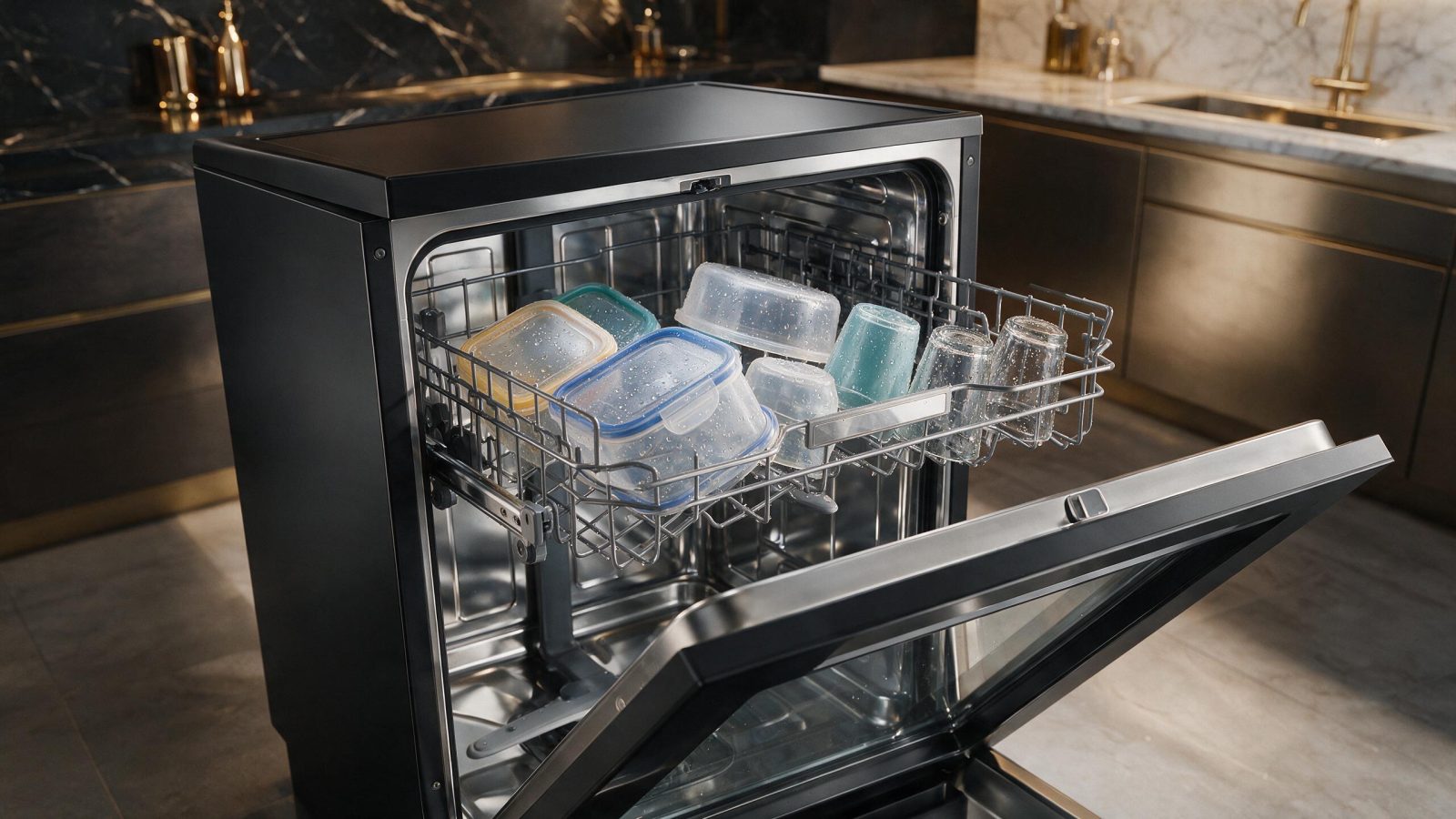
A wet plastic lid after the cycle is usually a result of how little heat plastic holds, not a sign that the dishwasher has failed.
A wet plastic lid after the cycle is usually a result of how little heat plastic holds, not a sign that the dishwasher has failed. Judge the machine by the rest of the load: if glass, plates and the tub dry normally, adjust how you load plastics, check rinse aid and the drying option, and leave it at that.
If glass plates come out dry but a lightweight plastic lid is still covered in droplets, the dishwasher may be working exactly as designed. Plastic stores less heat than glass, ceramic and metal, so it cools quickly and does not evaporate surface water as effectively during the drying stage.
Angle plastic pieces so water can run off instead of pooling in rims. Confirm rinse-aid and cycle settings are appropriate. Judge drying performance by the whole load rather than one lightweight item. These steps are useful because they are external, reversible and give you information without turning a symptom into an unsafe DIY repair.
The diagnostic question is whether only plastics are wet. If glassware, plates and the tub are all suddenly wetter than they used to be, check the selected cycle, door latch and whether the machine is completing normally. Broad drying failure is different from the normal behavior of one plastic lid.
A good troubleshooting note includes the exact model, what the appliance was doing when the symptom appeared, whether the condition is constant or intermittent, and any display code. Changing several settings at once makes the pattern harder to interpret, so make one safe change at a time and record the result.
The user manual for one Bertazzoni 24-inch dishwasher gives two reasons dishes may not dry: the drying option was not selected, or the rinse-aid dosage is too low. It also says to leave the door slightly open and use the dry option to remove remaining droplets. The Bertazzoni US FAQ adds that for the driest results you should use rinse aid and the Extra Dry function.
Neither of these is a repair, and both are worth trying before asking whether the machine itself is at fault. Check your own manual, as the controls and wording differ between models.
| Symptom | What it can point to | What you can safely check |
|---|---|---|
| Only plastics are wet | Lower heat storage in plastic, and water pooling in rims | Angle the pieces and place them where water can run off |
| Everything is damp | The drying option, rinse aid or cycle selection | Check the selected program, rinse-aid level and the dry option |
| Damp load plus standing water | A drain or filter problem rather than a drying one | Check the user-accessible filter and see the related article |
| Wet load and a fault code | A fault condition rather than normal plastic behavior | Write the code down before cancelling |
The purpose of these checks is not to prove which internal component has failed. It is to remove simple operating conditions and give the technician a cleaner starting point. If the symptom returns after the normal manual-approved checks, the next step should be diagnosis rather than repeated resets or improvised disassembly.
The same manual says to wash only plastics marked dishwasher safe and to load them according to the label. That includes the lid in question. Lightweight pieces can also end up lying flat where water pools on them.
If a single item is the only one that stays wet, change its position before changing anything else. Resting it at an angle so the rim drains, or moving it to a spot with better airflow, is a reversible change and gives a clear result on the next run.
If the dishwasher never finishes the cycle, shows an error or leaves standing water, the issue has moved beyond normal plastic drying. Avoid internal electrical disassembly and move to symptom-specific diagnosis.
If the appliance is leaking near electricity, smells of gas or burning insulation, sparks, overheats abnormally, or repeatedly trips a breaker, stop using it. Safety symptoms take priority over completing a cycle or protecting food.
Continue with The Cloudy Glass Problem Usually Comes Down to This Filter for the closest next step. Also see Standing Water in the Dishwasher Tub? Start With the Filter when the symptom overlaps with that system.
Schedule service when the symptom is repeatable after the safe checks, when a model-specific error returns, or when the next diagnostic step requires internal electrical, gas, sealed-refrigeration or built-in extraction work. The service request should include the model number, the exact symptom, the checks already completed and any photo of the display that helps document the condition.
Should I keep resetting the appliance if it works for a while afterward?
No. One documented reset can clear a temporary control state, but a fault that returns should be diagnosed rather than repeatedly cleared.
Should I order a part before the technician arrives?
Usually not. Similar symptoms can come from different causes, and an unnecessary part can cost more than the time saved. Confirm the failed component first.
What should I send with the booking request?
Send the model number, a concise description of the symptom, any error code, when the issue started and the result of the safe checks above.
Should I leave the door open after the cycle?
The manual for one Bertazzoni dishwasher says leaving the door slightly open and using the dry option helps remove remaining droplets. Check your own manual for how your model handles this.
Does rinse aid help with plastic?
It can help water sheet off surfaces. The manual says a rinse-aid dosage that is too low is one reason dishes do not dry, so checking the level is a sensible step.
When is a wet load a sign of a real problem?
When everything is wetter than before, or when the cycle does not finish, shows a code or leaves standing water. One lightweight lid is not that kind of signal on its own.
Author: Julian Reed — Appliance Care & Technical Review
—
A burner that clicks, lights on one side or needs several tries is usually checked against cap seating, residue, moisture and how long the…
Most refrigerator sounds are worth judging by whether they are new, persistent or paired with a temperature change, not by volume alone.
One side of a tray browning first is often a loading, rack or pan question before it is a sensor or heating question.
Share a few details and we’ll confirm an appointment. Prefer to talk? Call us and we’ll help right away.
Use the secure scheduler below to request your appointment.