A temperature reading tells you whether the cabinet is actually warm or only feels that way after the door was open.
A temperature reading tells you whether the cabinet is actually warm or only feels that way after the door was open. Measure away from the door and air outlets, compare the result with the setpoint and the ranges in the manual, and book service if the reading stays high once the cabinet has stabilized.
“Not cold enough” is a useful symptom, but a measured temperature turns it into diagnostic information. A carton near the door can feel warm after frequent opening even when the center of the cabinet is maintaining temperature.
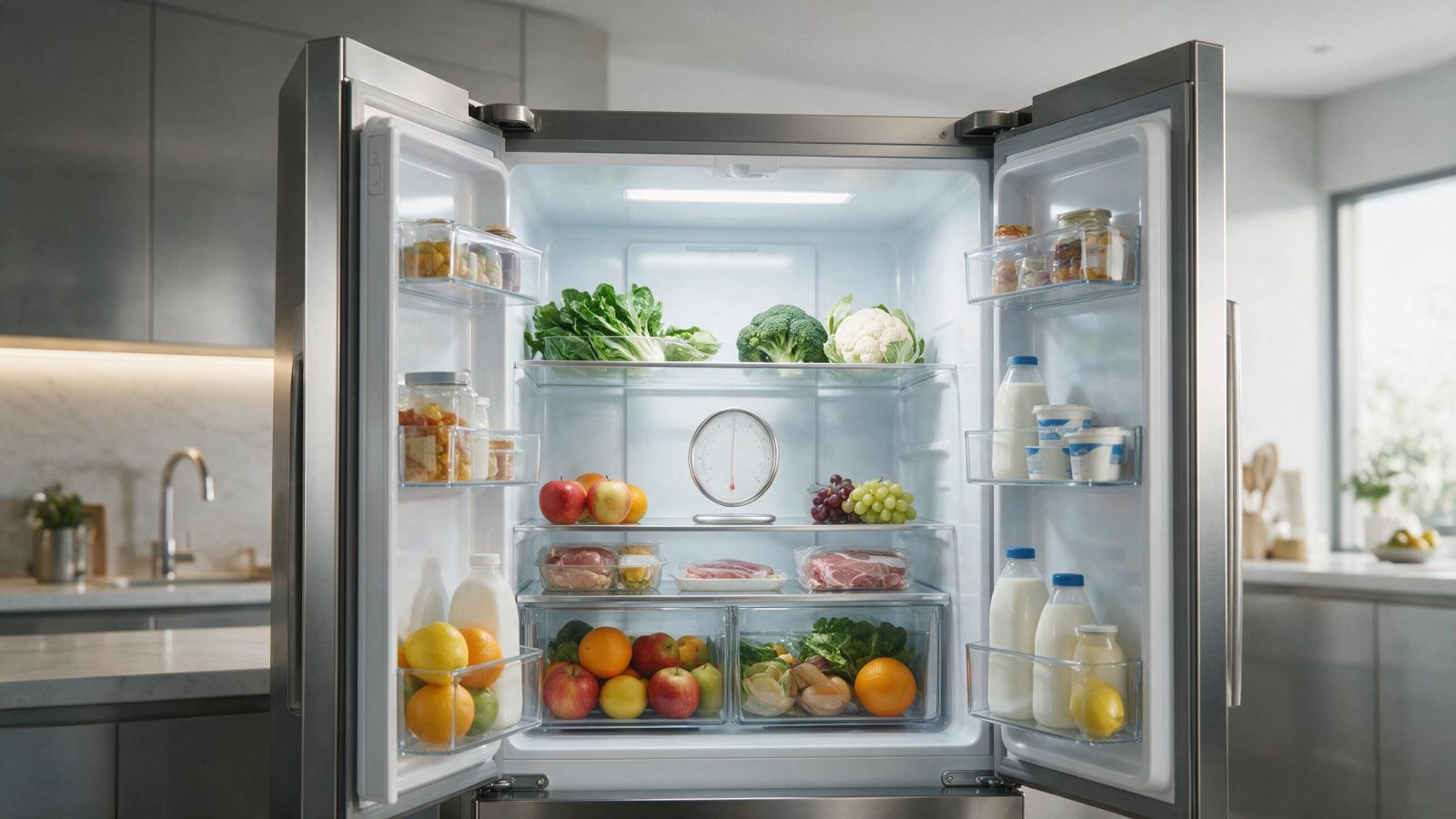
Place a reliable thermometer away from the door and direct air outlet. Record the display setpoint and actual reading after the cabinet stabilizes. Note recent grocery loading, power interruptions or long door openings. These steps are useful because they are external, reversible and give you information without turning a symptom into an unsafe DIY repair. Keep food clear of the sensor inside the fresh-food compartment so the reading reflects the cabinet and not a carton.
Inspect whether the door closes cleanly and whether visible vents are blocked. Do not lower the setpoint dramatically to force recovery; that can hide the pattern without repairing the cause. If temperature remains high, note alarms, fan sounds and whether the freezer or wine zone is affected too.
The refrigerator manual for one Bertazzoni built-in bottom-mount series gives the fresh-food range as 35 to 46 F, recommends 39 F, and lists 41 F as the factory default. The freezer range runs from 5 to minus 11 F with a default of 0 F, and the Fresco compartment ranges from 30 to 41 F with a default of 35 F. A reading that sits inside those ranges while the display shows a different setpoint is a different story from one that sits well outside them.
The manual also says food must not touch the temperature sensor in the fresh-food compartment, or the sensor cannot hold the set temperature, and that hot food should not be placed inside. For ambient temperatures above 86 F it suggests adjusted settings, so a warm kitchen can change the right target. Check your own manual for your model’s values.
A good troubleshooting note includes the exact model, what the appliance was doing when the symptom appeared, whether the condition is constant or intermittent, and any display code. Changing several settings at once makes the pattern harder to interpret, so make one safe change at a time and record the result.
The purpose of these checks is not to prove which internal component has failed. It is to remove simple operating conditions and give the technician a cleaner starting point. If the symptom returns after the normal manual-approved checks, the next step should be diagnosis rather than repeated resets or improvised disassembly.
| Symptom | What it can point to | What you can check |
|---|---|---|
| Carton near the door warm, center of the cabinet in range | Recent door openings | Re-measure at the center after the cabinet stabilizes |
| Cabinet at room temperature and no cooling | Showroom Mode, which the manual says turns cooling off | Look for the mode on the display; the manual says power-cycling clears it |
| Fresh-food compartment much warmer than usual, display shows a high setpoint | Vacation Mode, listed at 62 F for one model | Check the display and exit the mode as documented |
| Reading slightly high, setpoint near the top of the range | Eco Mode or a high setting | Compare the setpoint with the manual’s recommended value |
| Compressor silent just after power returns | The overload protector, which waits about six minutes before restarting | Wait; call if it has not restarted afterward |
| Warm after stable loading, vents clear, door seals well | Airflow, sensing, control or refrigeration | Schedule diagnosis and share your readings |
Persistent warming after basic checks belongs with a technician. The temperature data you collect can shorten the diagnostic path and help separate airflow, sensing, control and refrigeration problems.
If the appliance is leaking near electricity, smells of gas or burning insulation, sparks, overheats abnormally, or repeatedly trips a breaker, stop using it. Safety symptoms take priority over completing a cycle or protecting food.
Several documented modes alter what the cabinet does. Eco Mode sets roughly 46 F and 5 F, and Super Cool holds 35 F for 24 hours before reverting, so a reading that changes by itself after a day may simply be that mode ending. The manual advises activating Super Cool 4 to 8 hours before loading a lot of food. Sabbath Mode switches off the lights, buzzers and display panels, which can look like a dead control panel.
The manual also lists compressor start-up noise, liquid and gas flow sounds, a fan whistle and warm front edges as normal. After a power cut or an unplug and replug, the compressor’s overload protector waits about six minutes before restarting; the manual says to call service only if it has not restarted after that.
Continue with Every Refrigerator Has a Voice — Here’s What Yours Is Telling You for the closest next step. Also see Bertazzoni Refrigerator Repair Cost: What the Estimate Actually Depends On when the symptom overlaps with that system.
Schedule service when the symptom is repeatable after the safe checks, when a model-specific error returns, or when the next diagnostic step requires internal electrical, gas, sealed-refrigeration or built-in extraction work. The service request should include the model number, the exact symptom, the checks already completed and any photo of the display that helps document the condition.
Should I keep resetting the appliance if it works for a while afterward?
No. One documented reset can clear a temporary control state, but a fault that returns should be diagnosed rather than repeatedly cleared.
Should I order a part before the technician arrives?
Usually not. Similar symptoms can come from different causes, and an unnecessary part can cost more than the time saved. Confirm the failed component first.
What should I send with the booking request?
Send the model number, a concise description of the symptom, any error code, when the issue started and the result of the safe checks above.
What temperature should a built-in refrigerator be set to?
The manual for one Bertazzoni bottom-mount series recommends 39 F for the fresh-food compartment and lists 0 F as the freezer default. Your own manual gives the values for your model.
How long should I wait after a power cut before worrying?
One manual describes a short protective delay of about six minutes. A compressor still silent beyond that is the point to call.
Can a warm kitchen make the refrigerator read warmer?
The manual for one model suggests different settings when the room is above 86 F, and notes that frequent door opening can leave the fresh-food compartment not cold enough. Account for both before reading the thermometer as a fault.
Author: Julian Reed — Appliance Care & Technical Review
—
An empty ice bin can come down to the ice maker being switched off, the freezer running warm, or a water supply or filter…
An induction zone heats only when it detects a suitable pan sitting correctly on it, so the first thing to check is the cookware…
On many Bertazzoni self-clean ovens the door unlocks only when the CLEAN light goes out, and that happens after a cool-down phase that follows…
Share a few details and we’ll confirm an appointment. Prefer to talk? Call us and we’ll help right away.
Use the secure scheduler below to request your appointment.