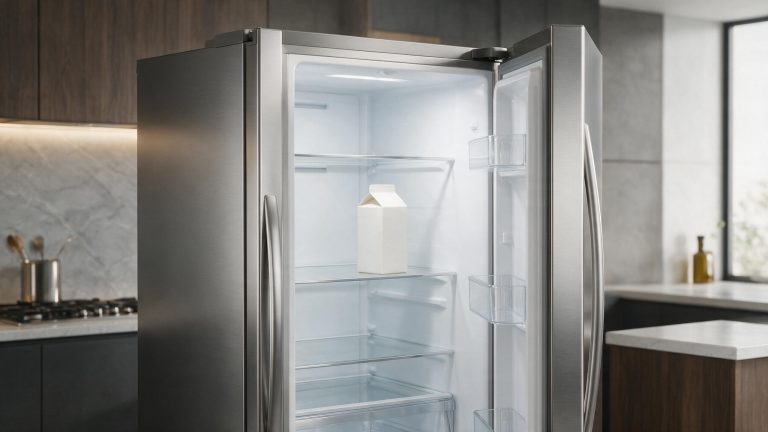
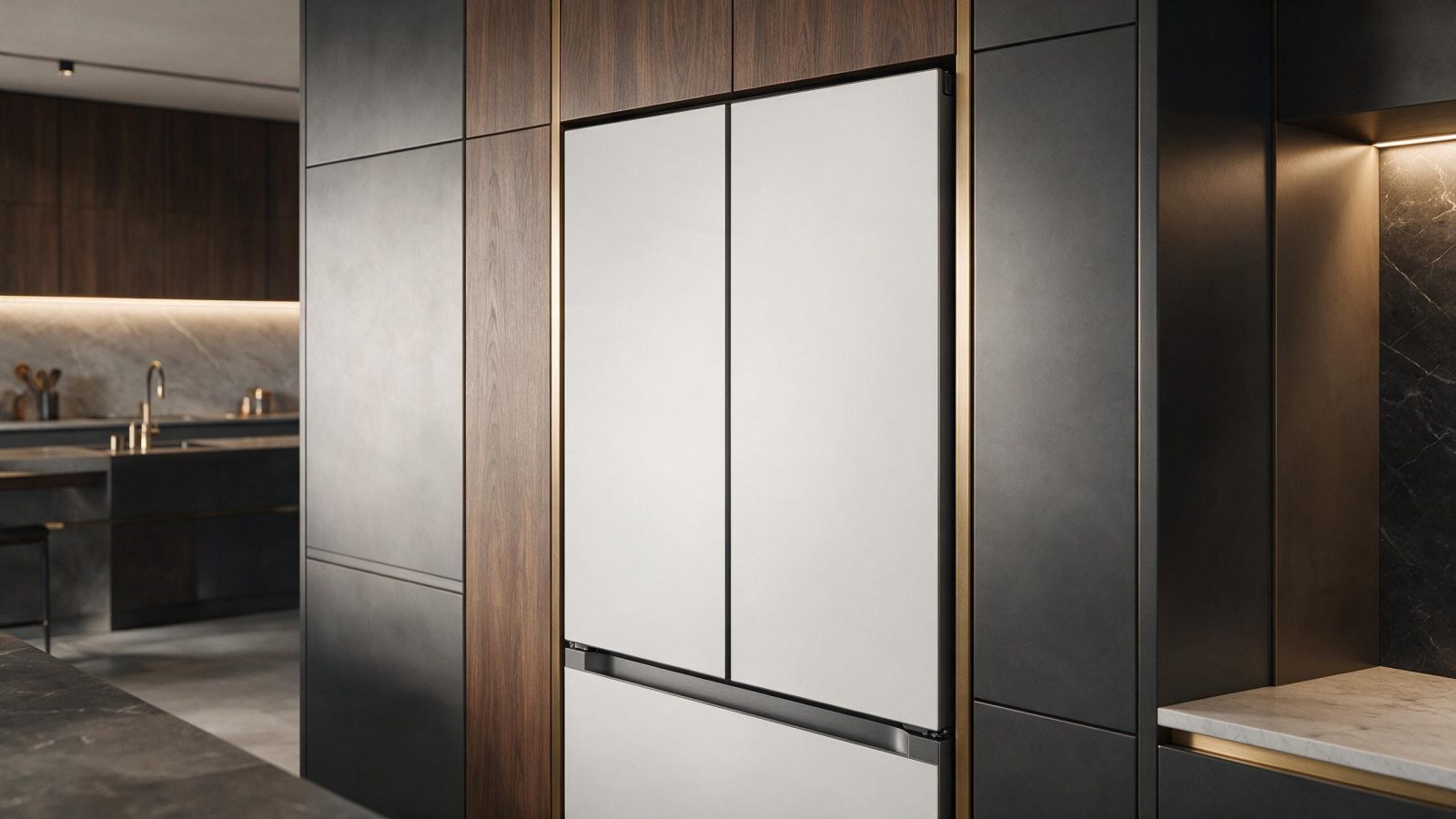
A panel-ready refrigerator keeps its performance when the door closes fully and air can move around the installation.
A panel-ready refrigerator keeps its performance when the door closes fully and air can move around the installation. Check the gasket, the panel and the ventilation openings first; a temperature that drifts anyway belongs with a technician.
Panel-ready refrigeration is designed to disappear into the kitchen, but the installation still has to breathe and close correctly. The most useful maintenance habits preserve those two conditions. The manual for one built-in model also gives installation distances from heat sources, which is a good reason to keep the surrounding cabinetry in mind.
Clean the gasket with a mild approved method. Make sure the decorative panel and stored food do not prevent full door closure. Keep built-in ventilation openings clear of rugs, boxes and decorative trim. These steps are useful because they are external, reversible and give you information without turning a symptom into an unsafe DIY repair.
Inside the cabinet, do not pack food directly against visible air outlets. After loading or cleaning, verify performance with an actual thermometer rather than by touch. Panel alignment can affect sealing even when the refrigeration system itself is healthy.
The refrigerator manual for one Bertazzoni built-in model says to install it at least 12 inches from ranges, ovens and other heat sources, with a smaller allowance for electric ovens, and in a room that stays at or above 50 F. Those figures describe the installation, not a maintenance step, so they are best used as a reminder: a cabinet next to a hot oven works harder than one that is not.
Because panel-ready doors carry a decorative panel, anything that stops the door from closing fully can also let warm air in. Stored items, a bottle or a panel that has shifted can all do that, which is why the article starts with full closure.
A good troubleshooting note includes the exact model, what the appliance was doing when the symptom appeared, whether the condition is constant or intermittent, and any display code. Changing several settings at once makes the pattern harder to interpret, so make one safe change at a time and record the result.
The purpose of these checks is not to prove which internal component has failed. It is to remove simple operating conditions and give the technician a cleaner starting point. If the symptom returns after the normal manual-approved checks, the next step should be diagnosis rather than repeated resets or improvised disassembly.
| Symptom | What it can point to | What you can check |
|---|---|---|
| Door seems to close but sits slightly proud | A stored item, panel position or a dirty gasket | Move food back from the door and wipe the gasket |
| Cabinet feels warm after loading hot food | The manual says hot food should not go in | Let food cool first and re-measure |
| One area of the fresh-food side holds the wrong temperature | Food against the sensor or air outlets | Keep food clear of both, per the manual |
| Front edges warm to the touch | Anti-condensation warming, listed as normal for one model | No action |
| Temperature drifts with clear vents and a sealing door | Fan, sensor, control or alignment | Schedule service |
Do not adjust hinges, remove decorative panels or extract the refrigerator as routine homeowner maintenance unless the manufacturer specifically documents that procedure. Persistent alignment or temperature issues belong with service.
If the appliance is leaking near electricity, smells of gas or burning insulation, sparks, overheats abnormally, or repeatedly trips a breaker, stop using it. Safety symptoms take priority over completing a cycle or protecting food.
The manual says food must not touch the temperature sensor in the fresh-food compartment, or the sensor cannot hold the set temperature. It also warns against placing hot food inside. Both are loading habits, and both can look like a refrigerator fault if overlooked.
It describes separate cooling circuits for refrigerator and freezer, so each side can behave differently. After rearranging shelves, give the cabinet time to settle before you judge it, then check with a thermometer instead of by touch. If the reading is still off with food clear of the sensor and the vents open, the next step is a diagnostic visit, not further rearranging.
Continue with Coil and Seal Care for a Bertazzoni Refrigerator for the closest next step. Also see Before You Book a Fridge Repair, Get an Actual Temperature Reading when the symptom overlaps with that system.
Schedule service when the symptom is repeatable after the safe checks, when a model-specific error returns, or when the next diagnostic step requires internal electrical, gas, sealed-refrigeration or built-in extraction work. The service request should include the model number, the exact symptom, the checks already completed and any photo of the display that helps document the condition.
Should I keep resetting the appliance if it works for a while afterward?
No. One documented reset can clear a temporary control state, but a fault that returns should be diagnosed rather than repeatedly cleared.
Should I order a part before the technician arrives?
Usually not. Similar symptoms can come from different causes, and an unnecessary part can cost more than the time saved. Confirm the failed component first.
What should I send with the booking request?
Send the model number, a concise description of the symptom, any error code, when the issue started and the result of the safe checks above.
Does a panel-ready refrigerator need ventilation?
Yes, built-in models rely on the ventilation paths the installation provides. Keep those openings clear and check the installation section of your manual.
Why does the refrigerator not hold temperature when I load warm food?
The manual for one Bertazzoni model says hot food should not be placed inside, and that food touching the sensor prevents it from holding the set temperature.
Do the refrigerator and the freezer cool separately?
The manual for one model describes separate cooling circuits with separate defrosting, so air and odors do not mix.
Author: Julian Reed — Appliance Care & Technical Review
For a built-in refrigerator, coil and seal care means a clean, evenly sealing gasket and clear air paths, with condenser cleaning limited to what…
There is no single correct descaling interval, because hardness, water use and any softener or filter in the home all change how fast minerals…
Cloudy glassware can come from removable film or from permanent etching, and the filter is a good first step because a dirty one can…
Share a few details and we’ll confirm an appointment. Prefer to talk? Call us and we’ll help right away.
Use the secure scheduler below to request your appointment.