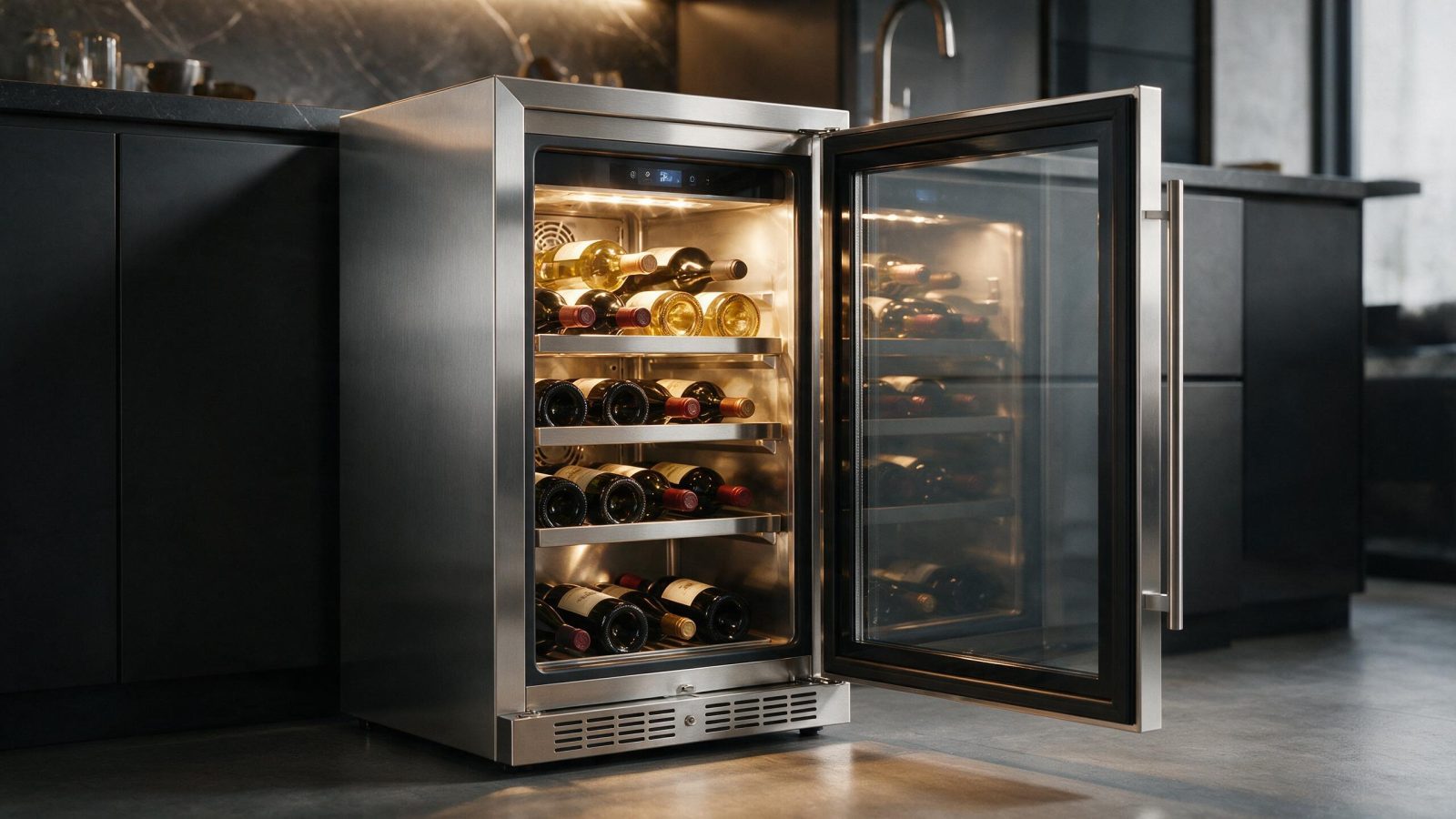
A wine cooler that drifts is first checked by measuring the real temperature of each zone, then comparing it with the setpoint, the load and how long the change has lasted.
A wine cooler that drifts is first checked by measuring the real temperature of each zone, then comparing it with the setpoint, the load and how long the change has lasted. Door seal, ventilation and recent loading explain some drift; a cabinet that stays off its setpoint under stable conditions needs diagnosis.
Wine storage problems are easy to miss because the display may still look normal while the cabinet slowly drifts away from its setpoint. The useful first step is to measure the actual temperature instead of trusting a quick touch or a single display number.
Place a reliable thermometer inside and let it stabilize. Check whether the door closes cleanly and the gasket contacts evenly. Make sure built-in ventilation openings are not blocked by cabinetry, rugs or stored items. These steps are useful because they are external, reversible and give you information without turning a symptom into an unsafe DIY repair.
A newly loaded cabinet, repeated door openings or bottles packed tightly against internal air paths can create temporary temperature differences. A recurring problem under stable conditions is different. Fan noise, abnormal frost, repeated alarms or a compressor that starts and stops unusually often deserve a deeper diagnostic visit.
A good troubleshooting note includes the exact model, what the appliance was doing when the symptom appeared, whether the condition is constant or intermittent, and any display code. Changing several settings at once makes the pattern harder to interpret, so make one safe change at a time and record the result.
The user manual for the Bertazzoni 18-inch wine columns describes two zones, with the upper zone defaulting to 54 F and the lower to 50 F, each adjustable between 39 and 64 F. If the upper zone is set below 54 F, the lower zone must not exceed 50 F. It says to wait at least 12 hours at first start before loading bottles and that reaching a changed setpoint can take 6 to 12 hours.
The manual also stresses keeping temperature constant because swings can age wine early, and notes that temperatures can drift slightly after frequent door openings or loading room-temperature bottles. Settings differ by model, so use your own manual.
| Symptom | What it can point to | What you can safely check |
|---|---|---|
| Drift soon after a setpoint change | The cabinet still reaching its new setting | Wait the time the manual gives, then measure again |
| Drift after loading many bottles | Load and room-temperature bottles | Allow the cabinet time and avoid repeated door openings |
| One zone warm, the other normal | A zone-specific issue, or the setpoint relationship between zones | Record both setpoints and both readings |
| Display shows Check Cond | The condenser area needs cleaning, per one model’s manual | Follow the manual’s steps after switching off and waiting about 30 minutes |
The purpose of these checks is not to prove which internal component has failed. It is to remove simple operating conditions and give the technician a cleaner starting point. If the symptom returns after the normal manual-approved checks, the next step should be diagnosis rather than repeated resets or improvised disassembly.
The same manual lists display messages including Power Failure, door open, zone too warm or too cold, and error codes. Touching Alarm shows the code, and it says to call Customer Care. For higher-than-normal temperatures its troubleshooting list includes checking for a malfunction code, the correct setting, a clean condenser, doors left open and a large load recently added; it also treats a long compressor run in a hot room as expected behavior.
The condenser or toe-kick area should be cleaned every 6 months with a soft brush. Humidity control has three levels, with Medium as the default.
Do not remove built-in panels to inspect fans, wiring or sealed refrigeration components. Record the setpoint, measured temperature, room conditions and whether one zone or the entire cabinet is affected.
If the appliance is leaking near electricity, smells of gas or burning insulation, sparks, overheats abnormally, or repeatedly trips a breaker, stop using it. Safety symptoms take priority over completing a cycle or protecting food.
Continue with Cellar-Like Conditions at Home: Caring for a Built-In Wine Column for the closest next step. Also see When a Wine Cooler Needs Real Diagnostic Tools, Not Just Patience when the symptom overlaps with that system.
Schedule service when the symptom is repeatable after the safe checks, when a model-specific error returns, or when the next diagnostic step requires internal electrical, gas, sealed-refrigeration or built-in extraction work. The service request should include the model number, the exact symptom, the checks already completed and any photo of the display that helps document the condition.
Should I keep resetting the appliance if it works for a while afterward?
No. One documented reset can clear a temporary control state, but a fault that returns should be diagnosed rather than repeatedly cleared.
Should I order a part before the technician arrives?
Usually not. Similar symptoms can come from different causes, and an unnecessary part can cost more than the time saved. Confirm the failed component first.
What should I send with the booking request?
Send the model number, a concise description of the symptom, any error code, when the issue started and the result of the safe checks above.
How long should I wait after changing the temperature?
The manual for one Bertazzoni wine column says reaching a changed setpoint can take 6 to 12 hours. A reading soon after the change is not a reliable test.
What does Check Cond mean?
On the manual for one wine column, it prompts you to clean the condenser or toe-kick area, which the manual says to do every 6 months after switching off and waiting about 30 minutes.
Is it a problem if the compressor runs a lot in summer?
That manual describes a long compressor run in a hot room as expected. It matters more if the cabinet is also above its setpoint under stable conditions.
Author: Julian Reed — Appliance Care & Technical Review
—
A burner that clicks, lights on one side or needs several tries is usually checked against cap seating, residue, moisture and how long the…
Most refrigerator sounds are worth judging by whether they are new, persistent or paired with a temperature change, not by volume alone.
One side of a tray browning first is often a loading, rack or pan question before it is a sensor or heating question.
Share a few details and we’ll confirm an appointment. Prefer to talk? Call us and we’ll help right away.
Use the secure scheduler below to request your appointment.