Safe gas habits come down to keeping removable parts clean and seated, turning a burner off if it does not light, holding the knob long enough for the flame-failure device to warm, and treating a persistent gas smell as a hard stop.
Safe gas habits come down to keeping removable parts clean and seated, turning a burner off if it does not light, holding the knob long enough for the flame-failure device to warm, and treating a persistent gas smell as a hard stop. Anything that touches valves, regulators or conversion belongs to a qualified installer.
Gas appliances are safe when installed, maintained and operated correctly, but they deserve a stricter troubleshooting boundary than many other kitchen devices. The manuals treat flame-failure devices as part of the design, not an obstacle.
Keep removable burner parts clean and completely dry. Use kitchen ventilation and maintain hood filters. Turn a burner off if it does not ignite promptly instead of allowing repeated gas release. These steps are useful because they are external, reversible and give you information without turning a symptom into an unsafe DIY repair.
A persistent gas smell is the hard stop. Leave the area if necessary and follow local gas-utility or emergency guidance. Internal valves, regulators and pressure adjustments are not homeowner maintenance.
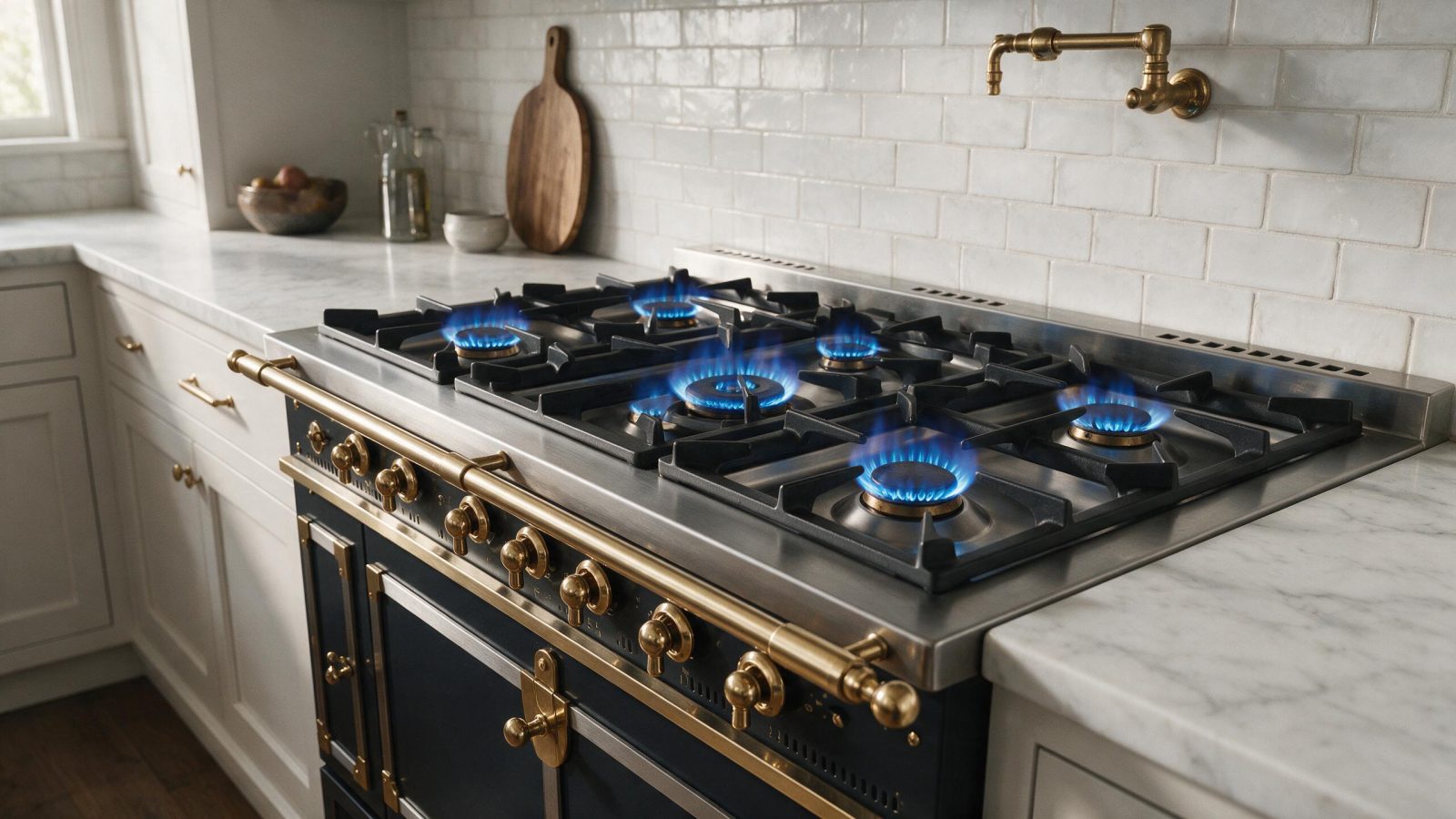
The owner’s manual for Bertazzoni gas ranges says to press in the knob, turn it counter-clockwise to HIGH, and keep holding it 5 to 10 seconds after the burner lights. Each burner has a thermocouple flame-failure device that cuts the gas if the flame goes out, and it must be heated for a few seconds before the knob is released. Bertazzoni’s US FAQ says a burner that takes two or three tries is explained by that warm-up, and suggests holding the knob 4 to 5 seconds.
The dual-fuel manual adds that you should not light a burner if the black cap is missing or not centered, because the flame will be irregular. If a flame goes out, repeat the ignition procedure.
A good troubleshooting note includes the exact model, what the appliance was doing when the symptom appeared, whether the condition is constant or intermittent, and any display code. Changing several settings at once makes the pattern harder to interpret, so make one safe change at a time and record the result.
The purpose of these checks is not to prove which internal component has failed. It is to remove simple operating conditions and give the technician a cleaner starting point. If the symptom returns after the normal manual-approved checks, the next step should be diagnosis rather than repeated resets or improvised disassembly.
| Symptom | What it can point to | What you can check |
|---|---|---|
| Burner needs two or three tries | The thermocouple needs time to warm | Hold the knob a few seconds longer after lighting, as the manual describes |
| Flame is yellow, large or distorted | Clogged ports or the wrong gas setting | Clean the cool cap and ports; conversion is for a qualified installer |
| Igniters spark but no flame | The manual attributes this to the gas supply being off or interrupted | Stop and treat it as a gas-supply question |
| Igniters do nothing | A tripped circuit, blown fuse or no power | Check the breaker and the power connection |
| Igniters keep sparking after the flame lights | Stuck ignition micro-switches, per the manual | Stop and call a qualified technician |
| Some orange in the flame | Airborne impurities, which fade with use | No action |
Never drill burner ports, bypass flame-safety components or use the oven to heat the room. Cleaning a user-removable cap is maintenance; opening the gas path is repair work.
If the appliance is leaking near electricity, smells of gas or burning insulation, sparks, overheats abnormally, or repeatedly trips a breaker, stop using it. Safety symptoms take priority over completing a cycle or protecting food.
The manual’s instruction for a gas smell is specific: do not light any appliance, touch electrical switches or use a phone in the building. The call to the gas supplier is to be made from a neighbor’s phone, with the fire department as the fallback when the supplier is unreachable. That goes further than simply leaving the room.
Two more habits come from the same manual. Keep the flame from extending beyond the base of the pan, since flame tips past the pan can damage cookware handles. And never operate the range without the anti-tip device engaged. During a power failure, the manual says burners can be lit with a match or a gas lighter, and the flame-failure devices keep working. Check your own manual for the details on your model.
Continue with One Burner Won’t Light Evenly on Your Bertazzoni Range? Start Here for the closest next step. Also see A Burning Smell From Your Range or Oven: What It Means to Stop Now when the symptom overlaps with that system.
Schedule service when the symptom is repeatable after the safe checks, when a model-specific error returns, or when the next diagnostic step requires internal electrical, gas, sealed-refrigeration or built-in extraction work. The service request should include the model number, the exact symptom, the checks already completed and any photo of the display that helps document the condition.
Should I keep resetting the appliance if it works for a while afterward?
No. One documented reset can clear a temporary control state, but a fault that returns should be diagnosed rather than repeatedly cleared.
Should I order a part before the technician arrives?
Usually not. Similar symptoms can come from different causes, and an unnecessary part can cost more than the time saved. Confirm the failed component first.
What should I send with the booking request?
Send the model number, a concise description of the symptom, any error code, when the issue started and the result of the safe checks above.
Why does my gas burner need two or three tries to light?
Bertazzoni’s US FAQ explains this by the thermocouple needing time to heat up, and suggests holding the knob on high for 4 to 5 seconds after lighting.
Is a yellow flame normal on a gas range?
The manual for one range says a good flame is stable and blue, that yellow flames need adjustment and that slight yellow tips on LP gas are normal. Some orange fades with use.
Can I light a gas burner during a power outage?
The manual says burners can be lit with a match or gas lighter during a power failure, and the flame-failure devices keep working. Follow your own manual.
Author: Julian Reed — Appliance Care & Technical Review
Homeowner checks are the ones your manual documents: settings, removable filters, visible hoses, cool burner caps, thermometer readings and a single reset.
A breaker that trips repeatedly on the same appliance is telling you something, and resetting it again to test is the wrong response.
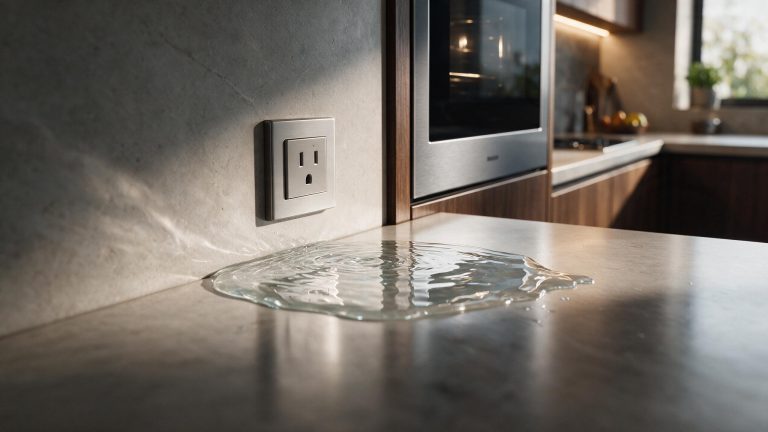
If water has reached an outlet, plug, power strip or the base of an appliance, stop troubleshooting and keep away from it.
Share a few details and we’ll confirm an appointment. Prefer to talk? Call us and we’ll help right away.
Use the secure scheduler below to request your appointment.